Avon Stories #6 – RB Boatbuilding and the Bristol Channel Pilot Cutters

This one’s a shorter podcast than usual, just 9 minutes long.  It’s an interview with John Raymond-Barker, who runs RB Boatbuilding in Underfall Yard at the end of the Floating Harbour.   He’s one of the last links to Bristol’s long tradition of boat building, and he specialises in making Bristol Channel Pilot Cutters, a type of boat that evolved in Bristol and Cardiff, to deal with the unique and treacherous conditions of the Bristol Channel, while racing to get as much lucrative piloting business as possible.

John told me more about the boats, and his work, and I hope you enjoy it.  If you want to know more about RB Boatbuilding, visit his website, which includes a page about the Pilot Cutters – and there’s lots of information about the Underfall Yard, where he’s based.

I got to scramble around a Pilot Cutter while it’s being built, and you can see those photos here (click on the picture to access the slideshow)

Continue reading “Avon Stories #6 – RB Boatbuilding and the Bristol Channel Pilot Cutters”

The sound of Horfield Brook

On Tuesday I was over in St Werburghs, and I went home via Mina Road Park, which always fascinates me.  From the road it looks like a pretty nondescript urban park, albeit with the incredible iron urinal – but it has a river running through it, Horfield Brook.

It’s a short stretch, but it’s been looked after, with viewing platforms, planting and decorative bridges.  At the north-west corner of the park it disappears into the old factory site, and there’s a pair of concrete slabs in the water, I guess to control the flow a little, and it sounds like this:

Continue reading “The sound of Horfield Brook”

Happy accidents

I’ve been borrowing my friend Tim’s GoPro Hero3, and even though I’ve used one before, I’m just making ridiculous mistakes every time I take it out.  Pretty much everything that comes off it is me looking multi-chinned, frowning down at the camera.

But this accident was a happy one.  I borrowed the camera hoping to take lots of film of heavy rain in puddles, in the Harbour, on the river… but of course it’s been a heatwave!  Yesterday it did rain for a little bit, and before the battery died, I shot a tiny film, 27 seconds of usable, I think – but accidentally slo-mo, which I love!  Enjoy some raindrops on the surface of the Harbour, slowed right down.  Some mistakes make me happy!

Avon Stories #5 – an artwalk with Nikki Pugh

This week’s Avon Story is a walk, with artist Nikki Pugh.

Nikki’s work investigates how we perceive, move through and interact with our surroundings. Her work combines a mixture of techniques from different disciplines, including sculpture, walking, playfulness and use of technology. Often it also includes other people getting involved in some way.

We walked down the River Avon together, watching the the tide change and discussing her recent projects. These include making landscape-reactive robots at the Pervasive Media Studio at the Watershed; exploring the Duddon Valley in the Lake District with Lancaster University and the Wordsworth Trust; and Orrery for Landscape, Sinew and Serendipity, a sculptural object that uses GPS and weather data to power an alternative – mechanical – method of visualising long distance bike rides.

Along the way we got distracted by the river, and stopped take a lot of photos and videos of the river, with a theme of “brown”!

Click on Nikki’s website to find out more about her work, including the projects we talked about, as well as commission some work, or invite her on a walk by a river.   You can also follow her twitter and flickr.

You can follow our walk on my map:

Continue reading “Avon Stories #5 – an artwalk with Nikki Pugh”

A bad photography day – and regaining my equilibrium

I often walk along the River and the Harbour with my partner – it’s not the quickest way to town from home, but it’s a diversion to take photos and enjoy the city, and it usually adds layers of interest and fun to days that would otherwise be about chores…  except sometimes it doesn’t.

Continue reading “A bad photography day – and regaining my equilibrium”

Avon Stories #4: Medieval Bristol part 2 – who were the Bristolians, and how did they live?

This is the second part of a conversation with Dr Peter Fleming, a professor at the University of the West of England, who specialises in Medieval History.

In Part 1, we talked about how Bristol became a superstar city, one of the most important in Western Medieval Europe. This time we talked about the people who lived in the city, from the Icelandic slaves to the Knights Templars, the Jewish communities, how women lived, and more; and how the city responded to the huge events of the era, including Plague and war.

Peter also told me about where the local seats of power were, and what Bristolians did for fun, including plays, sport and how Bristol has always been home to innovative music.

The official map of Medieval Bristol is here, and my map of the city, with photos of how sites we talked about look today, is below – and there are links to the Medieval maps in the post for Part 1 of the podcast.

If you want to know more about Peter Fleming, his UWE staff page is here, including the list of his articles and books he’s written and contributed to.   You can find more articles he’s written here, with links to read them.  And you can also follow Peter on his twitter.

We talked about books Peter has written, including:

  • Discovering Cabot’s Bristol: Life in the Medieval and Tudor Town, with Kieran Costello, which is out of print, but available in libraries and online retailers
  • His illustrated version of The Maire of Bristowe is Kalendar, written by town clerk Robert Ricart between 1480 and 1508, which you can buy from the Bristol Record Society.  Read more about it, with some of the amazing illustrations, on this blog by Peter.
  • Later this year, Peter’s latest book, Time, Space and Power in Fifteenth Century Bristol, will be published by Brill – tell your library to order it!

If you’d like to take a walk around Medieval Bristol, Bristol Old City has a Heritage Trail map with information about things you’ll see along the way, which Peter was involved in producing.  There’s also more information about Bristol’s town walls on Gatehouse.

***

You can download this podcast directly from the Avon Stories Soundcloud, and sign up to the Avon Stories RSS and subscribe on iTunes, to make sure you hear all the future stories.  Make sure you’re also following on twitter and instagram, for regular photos of the river.
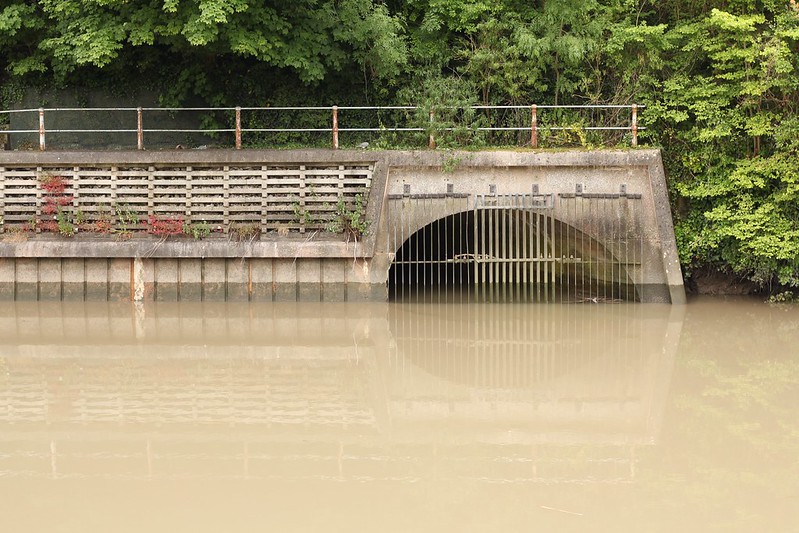
Photo set – the theme of the day was “brown”

This week I went for a walk with Nikki Pugh, who makes really fantastic interactive art.  We walked very slowly down the Chocolate Path, looking at the clouds of silt under the surface of the river, and the tide changing from coming in to sitting still at the change point, to watching what happens in the hour after the highest tide.

We both took a lot of photos with the theme of “brown”, and you can see Nikki’s flickr photoset here, and mine in this slideshow (click for more):

Watching the tide drop 1

I also made a couple of small, quiet videos, of how the water was reacting before and after Vauxhall Bridge:

Come back soon to hear the podcast, and make sure you check out Nikki’s website, and follow her on twitter.

Avon Stories #3 – Bristol and the Medieval Avon, part 1 – the City and the Rivers

This is the first of a two-part podcast where I met with Dr Peter Fleming of the University of the West of England, who told me all about Bristol in Medieval times, and how the River Avon and the River Frome were integral in making it one of the most important cities of the time in England and Western Europe.

In Part 1, we talk about the physical city and the infrastructure, how the geography made Bristol so important, as well as how people lived, who had the power, and what the city would have looked (and smelled) like.

Part 2 looks at how Bristol survived some of the big sweeping events of the time, with more about who lived and worked in the city, including the Knights Templars, the Jewish communities, women in Bristol, and Icelandic slaves.  We also talked about what Bristolians did for fun, including music, plays, sport and drinking.  Listen to that one here.

Of course, I have maps to give you an idea of what things looked like, with lots more links below.  First, my own map, with my rough approximations of where the city walls were, as well as the path of the River Frome as it runs through Bristol.  All errors are my own!

UPDATE!  There’s also the official Bristol City Council map of the Medieval city, overlaid on top of modern-day streets

I’ve also added photos of what the places look like now, and you can also find these in my flickr albums of walking the Frome line, walking the inside of the Medieval Wall, and what’s left of the Bristol Castle.

Continue reading “Avon Stories #3 – Bristol and the Medieval Avon, part 1 – the City and the Rivers”

Changing light, Avon mud

I’ve always loved how different the Avon mud looks, depending on the light, and especially how that changes on a day like today, when the clouds move so fast across the sky.  To me, the mud by the disused lock at Cumberland Basin looks like landscapes in miniature, with rivers, ridges of hills, or sand-dunes, and I’m always fascinated at how the changing light makes different parts of it jump out at me.

After a week of intense, bright sunshine, and heatwave conditions, the breezes felt so good, and I’ve been waiting for a day like this to film on, and make something that’s a meditative piece for me.   I should probably go back and film for longer, and make a long piece that I could have as part of a show/installation, but I wanted to see what it was like today.

Avon Stories Podcast #2: The Portishead to Bristol railway

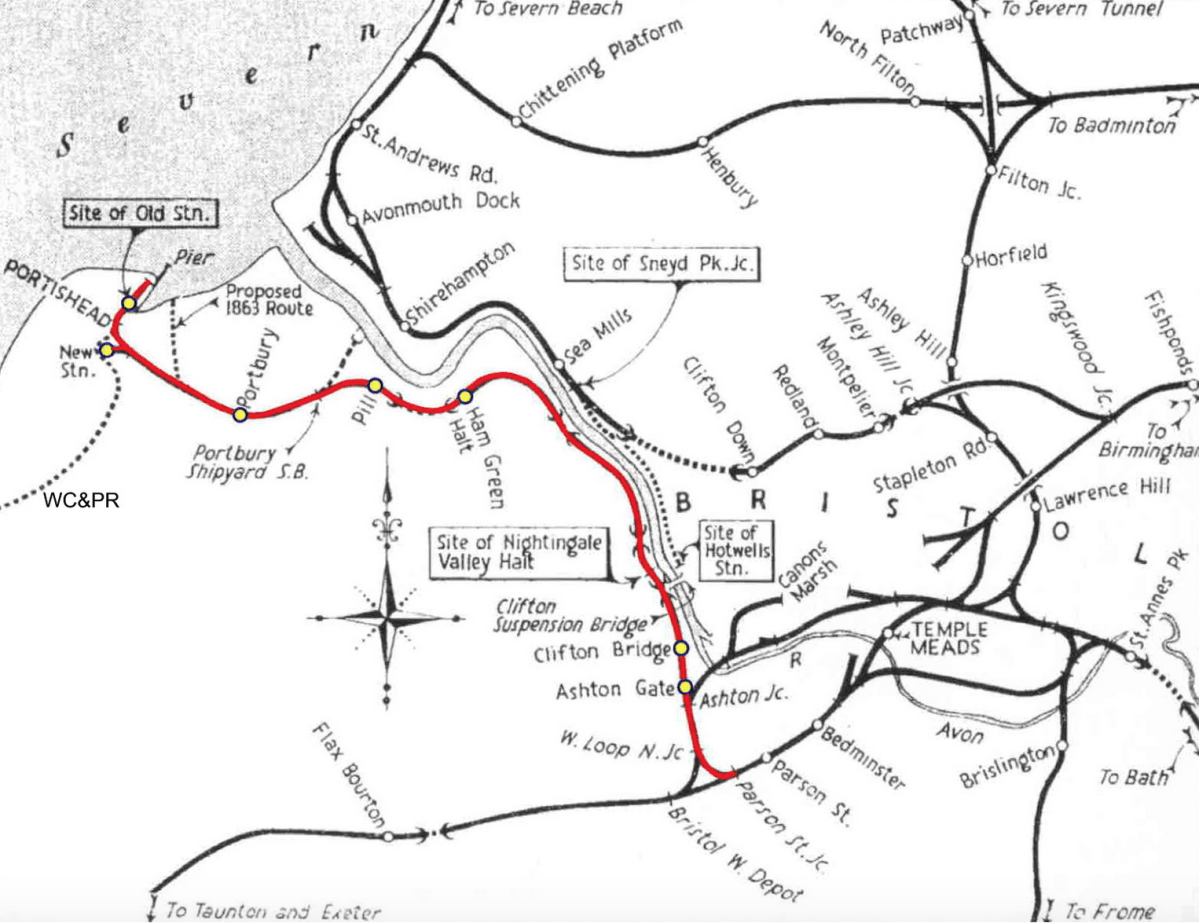
For this Avon Story, I travelled 20 miles outside of Bristol, to find out about the railway line that runs up the Avon Gorge to Pill and the Royal Portbury Dock, and used to continue on to Portishead, on the Bristol Channel.

Dave Chillistone of the Portishead Railway Group told me about how the issues that made the Avon so difficult for shipping in Victorian times resulted in the railway being built, the impact on the town, why it was closed, and why the PRG are campaigning for it to be re-opened.

Dave took me for a walk around the key places we talked about, and you can follow that walk, with photos of where we stopped, on this map – and scroll down for more photos, and lots more information about Portishead, the railway, the PRG and the plans for the railway’s return.

You can download the podcast directly from the Avon Stories Soundcloud, and sign up to the Avon Stories RSS and subscribe on iTunes, to make sure you hear all the future stories.  Make sure you’re also following on twitter and instagram, for regular photos of the river.
Continue reading “Avon Stories Podcast #2: The Portishead to Bristol railway”